Growing Yarrow From Seed In Your Garden
Posted on 09-05-2024 06:07 pm
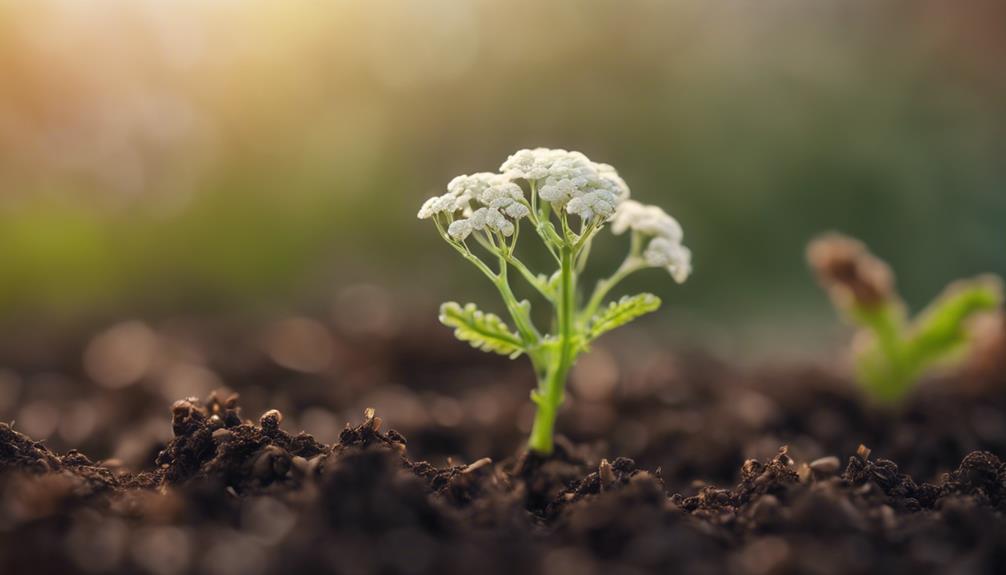
To successfully grow yarrow from seed, provide the right conditions. Prepare a well-drained soil mix and sow seeds indoors 8-10 weeks before transferring them outside. Place seeds on the surface, cover with vermiculite, and maintain consistent soil moisture.
Germination typically takes 14-21 days. After germination, thin out seedlings to promote healthy growth. Yarrow thrives in full sun, so choose a location that receives direct sunlight. By following these steps, you'll give your plants a strong start and promote healthy growth. Next, learn how to care for your seedlings and maintain your yarrow plants for optimal results.
Key Takeaways
- Prepare a well-draining soil mix, as yarrow is susceptible to root rot in waterlogged conditions.
- Sow yarrow seeds indoors 8-10 weeks prior to the last frost date or directly in the planting area during late fall or early spring, when the soil is cooler.
- Place seeds on the surface of the soil mix and cover them with a thin layer of vermiculite to maintain consistent moisture levels.
- Germination occurs within 14-21 days, and seedlings should be thinned to 12-18 inches apart once they reach 2 inches tall to prevent overcrowding.
- Yarrow seeds require specific conditions for germination, including light exposure, with optimal temperatures ranging from 65°F to 75°F (18°C to 24°C).
Preparing Soil and Sowing Seeds
To ensure successful germination and growth of yarrow, prepare a well-drained soil mix that allows for good drainage, as yarrow does not tolerate wet conditions. You can start yarrow seeds indoors 8-10 weeks before transferring them outside or directly sow them in your planting area during late fall or early spring.
For indoor sowing, place the seeds on the surface of the soil mix and cover them with a thin layer of vermiculite to retain moisture. When direct sowing, ensure the soil temperature is around 60°F (15°C) for optimal germination. If using containers, gently press the seeds onto the soil surface.
Germination takes 14 to 21 days, after which you'll need to thin out the seedlings to 12-18 inches apart once they reach 2 inches tall. Yarrow thrives in full sun, so choose a location that receives direct sunlight. By providing the right soil and care, your yarrow plants will flourish, bringing beauty and benefits to your garden.
Light and Temperature Requirements
Light and Temperature Requirements
To ensure successful germination and growth, yarrow seeds require specific light and temperature conditions. Since light is necessary for germination, sowing seeds on the soil surface is a crucial first step. The ideal temperature for yarrow seed germination falls between 65-72°F (18-22°C), with germination occurring within 10-14 days.
For indoor sowing, start 8-10 weeks before the last frost date in early spring. This allows the seeds to get a head start on the growing season. Once the soil has warmed up, transplant them outdoors. To promote ideal seedling development, provide 3-5 weeks of full light at 55-65°F (13-18°C). This will give the seedlings the best chance to grow strong and healthy.
When direct sowing in late spring, early summer, or fall, choose a location that receives full sun. Yarrow seeds thrive in areas with full light, so select a spot that receives direct sunlight. By providing the right light and temperature conditions, you'll be well on your way to growing healthy, thriving yarrow plants.
Planting and Transplanting Seedlings
To ensure a strong start for yarrow seedlings, sow seeds indoors 8-10 weeks before transplanting outdoors. Transplant seedlings into 72-cell flats or preferred seedling containers, allowing them to develop robust root systems and sturdy stems.
Before transplanting, harden off seedlings to help them adjust to outdoor conditions, reducing stress and the risk of shock. Once hardened, space them 12-24 inches apart, giving them room to grow and spread out.
When planting and transplanting yarrow seedlings, keep the following tips in mind:
- Sow seeds indoors in a controlled environment to ensure ideal growing conditions.
- Transplant seedlings when they have 2-3 sets of leaves to promote healthy growth and prevent overcrowding.
- Divide established yarrow plants every 3-4 years to maintain their vigor and promote new growth.
- Direct sowing of yarrow seeds can be done in late spring, early summer, or fall, in a location with full sun.
- Cover seeds with a thin layer of vermiculite to retain moisture, and bottom water or mist lightly to avoid covering the seed.
Caring for Yarrow Seedlings Outdoors
When transplanting yarrow seedlings outdoors, ensure they receive full sun to partial shade and are spaced 12-24 inches apart to facilitate proper growth, air circulation, and access to light. Regular watering is crucial to maintain consistently moist soil, but avoid waterlogging to prevent root rot and diseases. Fertilize seedlings with a balanced fertilizer at planting time and again 2-3 weeks later to promote healthy growth and development.
Mulching around the base of seedlings is essential to retain moisture, suppress weeds, and regulate soil temperature. Keep the area around seedlings weed-free to prevent competition for nutrients and water, and reduce the risk of disease transmission. Regular monitoring and maintenance will help prevent pests and diseases. By following these guidelines, you can create an optimal environment for your yarrow seedlings to thrive and produce an abundance of flowers and medicinal benefits.
Yarrow Growth and Maintenance Tips
To encourage thriving yarrow plants and maximize their floral and medicinal benefits, provide ideal growing conditions and regular maintenance. As a low-maintenance perennial, yarrow is relatively easy to care for, but it still requires attention to reach its full potential.
Essential growth and maintenance tips include:
- Plant yarrow in full sun or part shade, in well-drained soil with a pH of 6.0-7.0.
- Water yarrow plants regularly, avoiding overwatering, as they can tolerate dry soils.
- Prune yarrow flowers regularly to promote a second set of blooms.
- Divide yarrow plants every 3-4 years to maintain vigor and promote healthy growth.
- Provide support for yarrow plants, which can grow up to 28-30 inches tall, and space them 12-24 inches apart for proper air circulation and growth.
Harvesting and Using Yarrow Flowers
Harvesting and Using Yarrow Flowers
Yarrow flowers can be harvested when they are in full bloom and pollen is visible, which is the optimal time for medicinal use or as a cut flower. The harvesting process is straightforward and requires minimal equipment. Simply snip off the flower heads, leaving a small stem attached to the plant, which encourages the plant to produce more flowers, especially when grown in full sun.
To preserve yarrow flowers, hang them upside down in a warm, dry, dark place for several weeks. Dried yarrow flowers retain their color and shape well, making them suitable for potpourri, wreaths, and other craft projects. Fresh or dried yarrow flowers can also be used in floral arrangements, lasting for 7-12 days.
Yarrow flowers have been used for centuries to treat various ailments, including wounds, fever, and anxiety. You can create herbal teas, tinctures, and salves using fresh or dried yarrow flowers. With proper harvesting and preservation, you can enjoy the benefits of yarrow flowers from your own garden throughout the year.
Saving Yarrow Seeds for Next Season
After yarrow plants finish blooming, they produce seeds that can be saved for next season's harvest, allowing for the propagation of new yarrow plants and a continuous supply of this versatile herb. To save yarrow seeds, wait until the seed heads turn brown and the seeds mature. Then, snip off the seed heads and place them in a paper bag or envelope. Store the seeds in a cool, dry place until ready to plant.
When saving yarrow seeds, remember:
- Ensure seeds are completely dry before storing to prevent mold and mildew.
- Store seeds in airtight containers, such as glass jars or paper envelopes, to maintain freshness.
- Cover seeds with a thin layer of paper towel or cloth to absorb excess moisture.
- Planting yarrow seeds in containers or directly in the ground allows for a head start on the growing season.
- Sowing yarrow seeds indoors 6-8 weeks before the last frost date gives them a jumpstart on the growing season.
Frequently Asked Questions
Is Yarrow Difficult to Grow From Seed?
Growing yarrow from seed can be challenging due to its low germination rate, but it's achievable with good quality seeds, proper sowing depth, well-draining soil, adequate light, and consistent watering.
How Long Do Yarrow Seeds Take to Germinate?
Yarrow seeds typically take 10-14 days to germinate at 65-72°F (18-22°C), but optimal soil temperature, light, water, and humidity can improve seed viability and germination rates.
Can You Plant Yarrow Seeds Directly in the Ground?
Directly planting yarrow seeds in the ground requires preparation of well-draining soil, sowing at a depth of 1/8 inch, and placing them in a location with full sun. Consistent moisture and spacing of 12-18 inches apart are also crucial for successful growth.
Does Yarrow Require Cold Stratification?
Yarrow seeds require cold stratification to break dormancy, simulating winter conditions that trigger hormone regulation, and ensuring optimal growth under suitable light, moisture, and temperature conditions, which are essential for proper soil preparation.
Conclusion
Growing yarrow from seed demands attention to detail, patience, and dedication. Yarrow has been utilized for centuries, dating back to ancient Greece where it was used to control bleeding. Today, it is still valued for its medicinal properties and ornamental value. With proper care, yarrow plants thrive, providing a bountiful harvest and fostering a deeper appreciation for this remarkable herb.
Search
Categories
Recent Posts
Follow US
https://sites.google.com/view/gardeningfire
https://www.youtube.com/@Gardening-Fire
https://twitter.com/gardeningfire
https://www.instagram.com/gardeningfire/
https://www.facebook.com/GardeningFire/
https://www.tumblr.com/gardeningfire
https://gardeningfire.blogspot.com/
https://gardeningfire.wordpress.com/
https://www.pinterest.com/gardeningfire/
https://soundcloud.com/gardeningfire/