Growing Peppermint In Pot
by Lavender Seeds For Planting
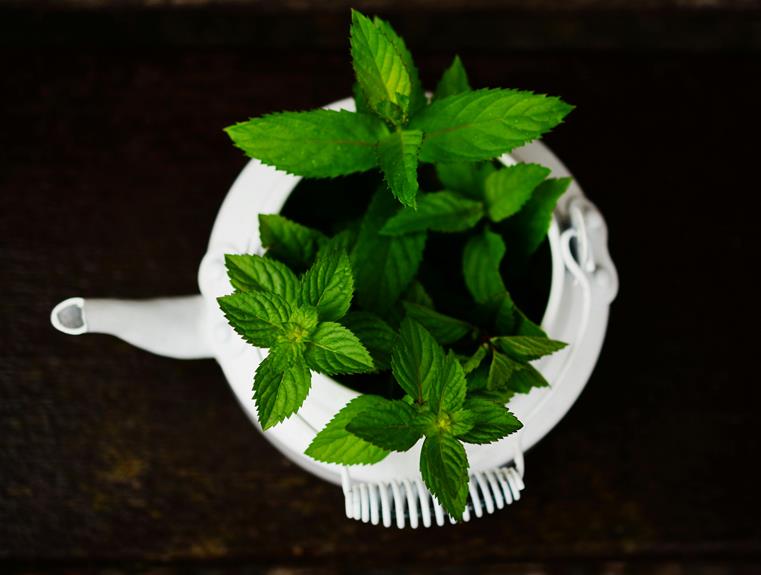
Growing Peppermint In Pot
To grow peppermint in a pot successfully, choose a container with a minimum 12-inch diameter and drainage holes. Opt for well-draining soil rich in organic matter, avoiding heavy clay. Place the pot in full sun or partial shade, providing 4-6 hours of sunlight daily. Keep the soil consistently moist, avoiding overwatering. Prune the plant regularly to promote bushier growth. You can even propagate new plants from cuttings. Harvest in the morning by cutting stems just above a leaf node for the best flavor. For more tips on how to grow peppermint in a pot, explore the detailed guidelines above.
Key Takeaways
- Choose a container with at least a 12-inch diameter and drainage holes.
- Use well-draining, pH-neutral soil mix with organic matter.
- Place in full sun or partial shade for 4-6 hours daily.
- Keep soil consistently moist without overwatering.
- Prune regularly for bushier growth and harvest top third of leaves.
Benefits of Growing Peppermint in Pot
By growing peppermint in a pot, you can effectively control its invasive nature and root spread. Potted mint is a versatile plant that can be grown indoors, making it a great option for those with limited outdoor space. The beauty of container gardening is that you have the flexibility to relocate your mint to the perfect spot with ideal sunlight and watering conditions.
Having peppermint in a pot not only helps in containing its growth but also makes it easier to harvest. You can conveniently snip off fresh mint leaves whenever you need them for culinary or medicinal purposes. The compact nature of potted mint makes it a space-saving choice, perfect for small gardens, balconies, or even windowsills.
Choosing the Right Container
When selecting the right container for growing peppermint, prioritize a minimum diameter of 12 inches to accommodate the plant's spreading roots effectively. Here are some key points to keep in mind:
- Make sure the container has drainage holes to prevent waterlogged soil, which can harm peppermint plants.
- Choose a sturdy container made of plastic, ceramic, or terracotta for durability.
- Take into account using a self-watering container to help maintain consistent moisture levels for peppermint.
Selecting a container with proper drainage is important to avoid root rot and other issues that can arise from waterlogged soil. The material of the container should be durable to withstand outdoor conditions if you plan to place it outside. Self-watering containers can be beneficial, especially if you tend to forget regular watering schedules.
Selecting the Ideal Soil Mix
For ideal growth of peppermint in a pot, choose a well-draining potting mix that's rich in organic matter and has a pH-neutral or slightly alkaline composition. This type of soil mix provides the necessary aeration and drainage to prevent waterlogging, which can be detrimental to peppermint plants.
Organic matter in the soil mix supports healthy root growth, essential for the overall well-being of your peppermint. Avoid heavy clay soils as they can compact and restrict root development in potted peppermint plants. To improve drainage and air circulation, consider incorporating perlite or sand into the potting mix. These additions help create a more favorable environment for root growth and overall plant health.
Placement and Sunlight Requirements
Wondering where to position your peppermint pot for best growth and health? When it comes to growing mint plants like peppermint in a container indoors, sunlight exposure is key for vibrant growth and potent essential oils in the peppermint leaves. Here's what you need to know:
- Full Sun or Part Shade: Peppermint thrives in full sun to partial shade, needing around 4-6 hours of sunlight daily for ideal growth.
- Pot Placement: Choose a south-facing window or a location with ample sunlight to place your peppermint pot, ensuring the plant receives direct sunlight to support a healthy growth cycle.
- Vibrant Growth: Proper placement and sunlight exposure are essential for cultivating aromatic peppermint leaves in a pot, as inadequate sunlight can result in leggy, weak growth and diminish the essential oils in the leaves.
Watering and Moisture Control
To keep healthy growth of your peppermint plant in a pot, make sure the soil is consistently moist without overwatering the roots. Water your mint plants when the top inch of soil feels dry to the touch, ensuring they've enough moisture without becoming waterlogged.
Using a saucer under the container can help catch excess water, preventing root rot and keeping the soil at the right moisture level. During hot, dry weather, increase the frequency of watering to maintain the required moisture for your mint plants.
To help retain moisture and reduce evaporation, consider mulching the top of the soil. This simple step can make a significant difference in the overall moisture control of your container-grown mint.
Pruning Techniques for Bushier Growth
Regularly pinch off the top growth of your mint plants to promote bushier foliage and promote healthier growth overall. Pruning mint plants is vital to stimulate lateral growth, prevent leggy growth, and maintain plant health. Follow these steps to make sure your mint thrives:
-
Pinch Off Top Growth: By removing the top growth of your mint plants, you encourage the development of more lateral branches, resulting in a bushier appearance.
-
Stimulate Branching: Trim mint stems just above a set of leaves to stimulate branching. This process helps the plant produce more side shoots, leading to denser foliage.
-
Prevent Leggy Growth: Regularly pruning your mint plants not only keeps them bushy but also prevents them from becoming leggy. Leggy growth can make the plant look sparse and weak.
Propagating Peppermint From Cuttings
If you want to expand your peppermint plant collection, consider propagating peppermint from cuttings for a quick and genetically consistent growth process. Start by snipping 6-inch stems from a healthy peppermint plant. Remove the lower leaves from the cutting and place it in a glass of water. Allow the cutting to develop roots, which typically occurs within 1-2 weeks. Once roots have formed, transfer the cutting to a pot filled with well-draining soil to support further growth. Propagating peppermint from cuttings guarantees genetic consistency and a faster growth process compared to growing from seeds.
| Steps for Propagating Peppermint from Cuttings |
|---|
| 1. Snip 6-inch stems from a healthy plant |
| 2. Remove lower leaves and place in water |
| 3. Wait for roots to develop (1-2 weeks) |
| 4. Transfer cutting to a pot with well-draining soil |
| 5. Enjoy genetically consistent peppermint growth |
Harvesting Fresh Peppermint Leaves
When harvesting fresh peppermint leaves, make sure you do so in the morning to capture the best flavor and aroma from the plant. This is when the essential oils are at their peak concentration, enhancing the taste and scent of the leaves.
To harvest your peppermint effectively, follow these steps:
- Use scissors or pruning shears to cut peppermint stems just above a leaf node. This method guarantees that the plant can continue growing vigorously.
- Regularly harvest peppermint by removing the top third of the plant to encourage new growth. By doing so, you promote bushier and healthier plants.
- Avoid harvesting more than one-third of the plant at a time to prevent stress and ensure continuous growth. This practice helps maintain the plant's vitality and longevity in your garden.
Conclusion
Congratulations on successfully growing peppermint in a pot! Now you can enjoy the fresh, minty aroma right at your fingertips. Just imagine the satisfaction of plucking those vibrant green leaves and adding them to your favorite drinks or dishes.
With proper care and attention, your peppermint plant will continue to thrive and provide you with endless culinary possibilities. Happy gardening!
Search
Categories
Recent Posts
Follow US
https://sites.google.com/view/gardeningfire
https://www.youtube.com/@Gardening-Fire
https://twitter.com/gardeningfire
https://www.instagram.com/gardeningfire/
https://www.facebook.com/GardeningFire/
https://www.tumblr.com/gardeningfire
https://gardeningfire.blogspot.com/
https://gardeningfire.wordpress.com/
https://www.pinterest.com/gardeningfire/
https://soundcloud.com/gardeningfire/