Growing Lavender In Pots Over Winter
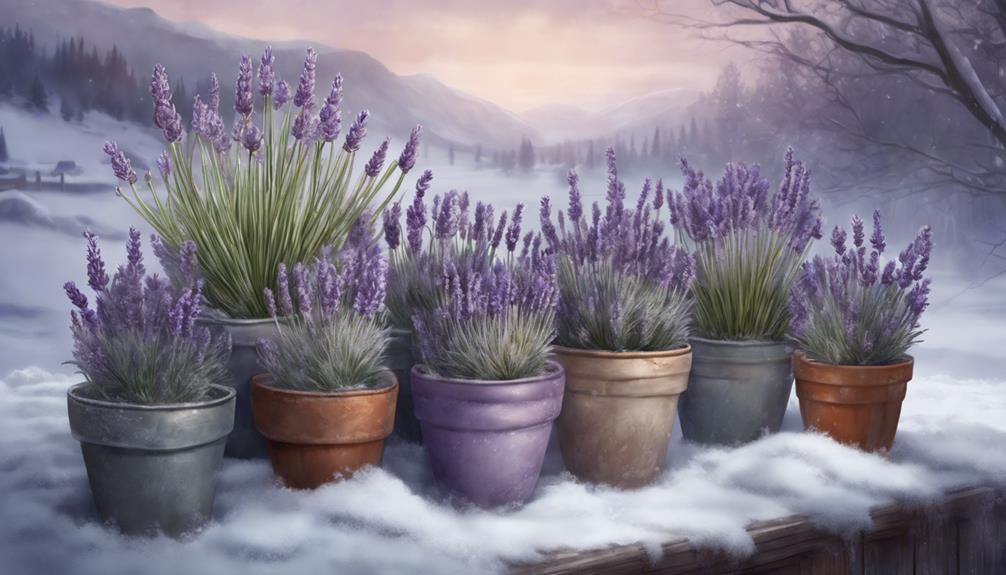
To successfully cultivate lavender in pots during the winter, it is crucial to attend to the plant's specific requirements for its optimal health. Factors such as providing adequate sunlight, ensuring proper drainage, and insulating the pots are all essential for the lavender's well-being in colder temperatures.
However, one often underestimated aspect that can significantly impact the lavender's survival is the consideration of this overlooked factor. By addressing this commonly neglected element, you can improve the chances of your lavender thriving even in the most severe winter conditions.
Winter Lavender Care Essentials
To ensure the health and vitality of your potted lavender plants in winter, it's crucial to provide proper care and attention to essential aspects. When transitioning your lavender indoors for the winter, it's vital to place them in a location with adequate sunlight exposure. Opt for a south-facing window where they can receive the limited winter sun. Proper watering is essential - allow the top inch of soil to dry out before watering to prevent the risk of overwatering and root rot. Pruning your lavender before bringing them indoors will support healthy growth throughout the winter season.
During winter, it's imperative to ensure good drainage for your potted lavender plants. This will help prevent water accumulation at the bottom of the pot, reducing the chance of root rot. Additionally, insulate your pots with mulch to regulate the soil temperature and safeguard the roots from extreme cold. Adequate air circulation around your indoor lavender plants is also key. This will mitigate moisture buildup, lowering the risk of fungal issues.
Proper Drainage for Lavender Pots
Proper drainage in lavender pots is crucial to prevent waterlogging and root rot, especially during the winter season. Lavender plants are sensitive to excess moisture, particularly in cold weather, making good drainage essential for their well-being.
To ensure your lavender thrives during the winter months, consider the following tips:
-
Drainage Holes: It's essential to have adequate drainage holes at the bottom of lavender pots to allow excess water to drain out. This helps prevent water from accumulating around the roots and causing harm.
-
Incorporation of Sand or Grit: Adding horticultural sand or grit to the potting soil can enhance drainage. These materials help aerate the soil and improve water flow, reducing the risk of waterlogging.
-
Raised Platforms or Well-Draining Soil: Elevating lavender pots on raised platforms or using well-draining soil mixes can aid in maintaining proper drainage. This setup facilitates efficient water drainage, preventing the roots from being exposed to waterlogged conditions.
Sunlight Requirements for Winter Lavender
To keep your winter lavender healthy and vibrant during the colder months, it's crucial to provide it with at least 6 hours of full sunlight daily. Lavender plants depend on sunlight to thrive and stay strong, especially in winter. Ample sunlight not only supports their growth but also encourages them to bloom, enhancing their beauty even in the chilly weather.
In areas with harsh winter conditions, getting enough sunlight can be challenging. If direct sunlight is scarce, consider using a grow light to supplement your lavender's light intake. Placing your lavender pots strategically indoors near a sunny window can also help ensure they get the necessary light exposure. Understanding the sunlight needs specific to your Hardiness Zone is key for successfully caring for lavender during winter.
Insufficient sunlight can result in spindly growth, fewer flowers, and weakened plants that are more prone to pests and diseases. To address these issues, consider light pruning to promote a more compact and robust growth pattern. By prioritizing sunlight for your lavender, you establish a strong foundation for a flourishing plant that will delight you with its beauty even in the coldest months.
Watering Guidelines for Potted Lavender
To maintain the health of your potted lavender, only water when the top inch of soil is dry to prevent overwatering. Proper watering is crucial for the well-being of your lavender plants, particularly during the winter dormancy period. Follow these key watering guidelines to ensure your potted lavender thrives:
-
Monitor Soil Moisture: Regularly check the soil's moisture level by inserting your finger into the soil. Water only when the top inch is dry to avoid overwatering and potential root rot problems.
-
Adjust Watering Frequency: Lavender plants' water needs vary based on factors like temperature and humidity. Adjust the watering frequency accordingly to provide adequate moisture without saturating the soil.
-
Winter Watering: Reduce watering frequency during winter as lavender plants are less active at this time. Providing around 1 inch of water per week should be adequate to maintain the health of your potted lavender during the winter months.
Insulating Lavender Roots With Mulch
Insulating the roots of potted lavender with mulch is crucial for protecting them from freezing temperatures during winter. Use organic materials like straw or pine needles to create a layer of insulation around the base of the plant. This protective barrier shields the roots from frost damage and helps maintain their health throughout the colder months.
Apply the mulch before the arrival of the first frost to ensure adequate protection for the lavender roots. Avoid using dense mulches that retain excess water, as they can cause root rot in lavender plants. The goal is to provide a stable temperature for the roots by creating a layer of insulation, safeguarding them from harsh weather conditions.
Protecting Lavender From Frost Damage
To protect your potted lavender from frost damage, it's crucial to use proper insulation methods to ensure its survival during the winter season. Frost can cause significant harm to lavender plants, leading to wilting, discoloration, and potential death.
Insulating your lavender pots with either mulch or blankets can create a protective shield against the harsh impacts of frost. Here are essential points to consider when insulating your lavender for frost protection:
-
Mulch or Blankets: Applying a layer of mulch or a thick blanket over your potted lavender can help retain heat and prevent frost from reaching the soil, safeguarding the fragile roots of the plants.
-
Monitoring Weather Conditions: Stay vigilant about weather forecasts, especially for frost warnings, to take necessary precautions promptly. Being proactive in protecting your lavender can significantly increase its chances of surviving the winter months.
-
Ensuring Root Protection: Frost can infiltrate the soil and damage the roots of lavender plants, affecting their overall well-being. By effectively insulating the roots, you can support the health and growth of your lavender despite the cold temperatures.
Moving Lavender Indoors for Winter
Consider relocating your potted lavender indoors before the first frost to protect it from cold temperatures. Bringing your plant inside can help it survive the winter and maintain its health. Prior to moving it, trim your plants to encourage new growth and preserve their shape. Once indoors, ensure your lavender receives sufficient sunlight, as this is crucial for its well-being during the colder months. Water your lavender approximately 1 inch per week, being careful not to overwater, especially in a controlled indoor environment. Placing your container near a window can provide the necessary light for photosynthesis, aiding in its survival.
| Steps to Help Your Lavender Thrive Indoors |
|---|
| 1. Trim Your Plants |
| 2. Bring It Inside Before Frost |
| 3. Ensure Adequate Sunlight |
| 4. Water Carefully |
Moving potted lavender indoors is essential in a cold climate to prevent root rot and ensure its survival throughout the winter. By following these steps, you can assist your plant in flourishing indoors and be prepared to thrive once spring arrives.
Frequently Asked Questions
Can Lavender Survive Winter in Pots?
Lavender can survive winter in pots with proper care. To protect it from frost, move it indoors where it can still receive adequate sunlight, water, and good drainage. Adjust your care routine accordingly for the winter season to ensure your potted lavender thrives.
How Do You Winterize a Potted Lavender Plant?
To prepare your potted lavender for winter, lightly prune it, water it weekly, use well-draining soil, fertilize it sparingly, ensure it gets sunlight, prevent pests, and control the temperature. Keep it indoors near a sunny window for a healthy lavender plant throughout the winter season.
Can Lavender Plants Be Left Outside in the in the Winter?
When winter storms arrive, it's crucial to protect your lavender plants from frost damage by bringing them indoors. Keep the pots shielded from the cold, ensure the roots stay warm for their continued thriving.
How Do You Keep Lavender Alive Indoors in the Winter?
To successfully care for lavender indoors during the winter, it is crucial to provide proper indoor conditions. This includes watering sparingly, ensuring sufficient sunlight exposure, using well-draining soil, maintaining a consistent temperature, gently pruning when needed, and safeguarding against pests. By following these essential steps, you can help your lavender plant thrive throughout the winter months.
Conclusion
In conclusion, it's vital to provide proper care for lavender when cultivating it in pots during the winter months.
Did you know that lavender can withstand temperatures as low as 20 degrees Fahrenheit if given the right attention?
By following the essential winter care guidelines for lavender detailed in this article, you can ensure your lavender thrives even in the chilliest weather.
Remember the significance of adequate drainage, sunlight exposure, watering routine, insulation, frost protection, and transitioning your lavender indoors to promote a successful winter growth season.
Search
Categories
Recent Posts
Follow US
https://sites.google.com/view/gardeningfire
https://www.youtube.com/@Gardening-Fire
https://twitter.com/gardeningfire
https://www.instagram.com/gardeningfire/
https://www.facebook.com/GardeningFire/
https://www.tumblr.com/gardeningfire
https://gardeningfire.blogspot.com/
https://gardeningfire.wordpress.com/
https://www.pinterest.com/gardeningfire/
https://soundcloud.com/gardeningfire/